

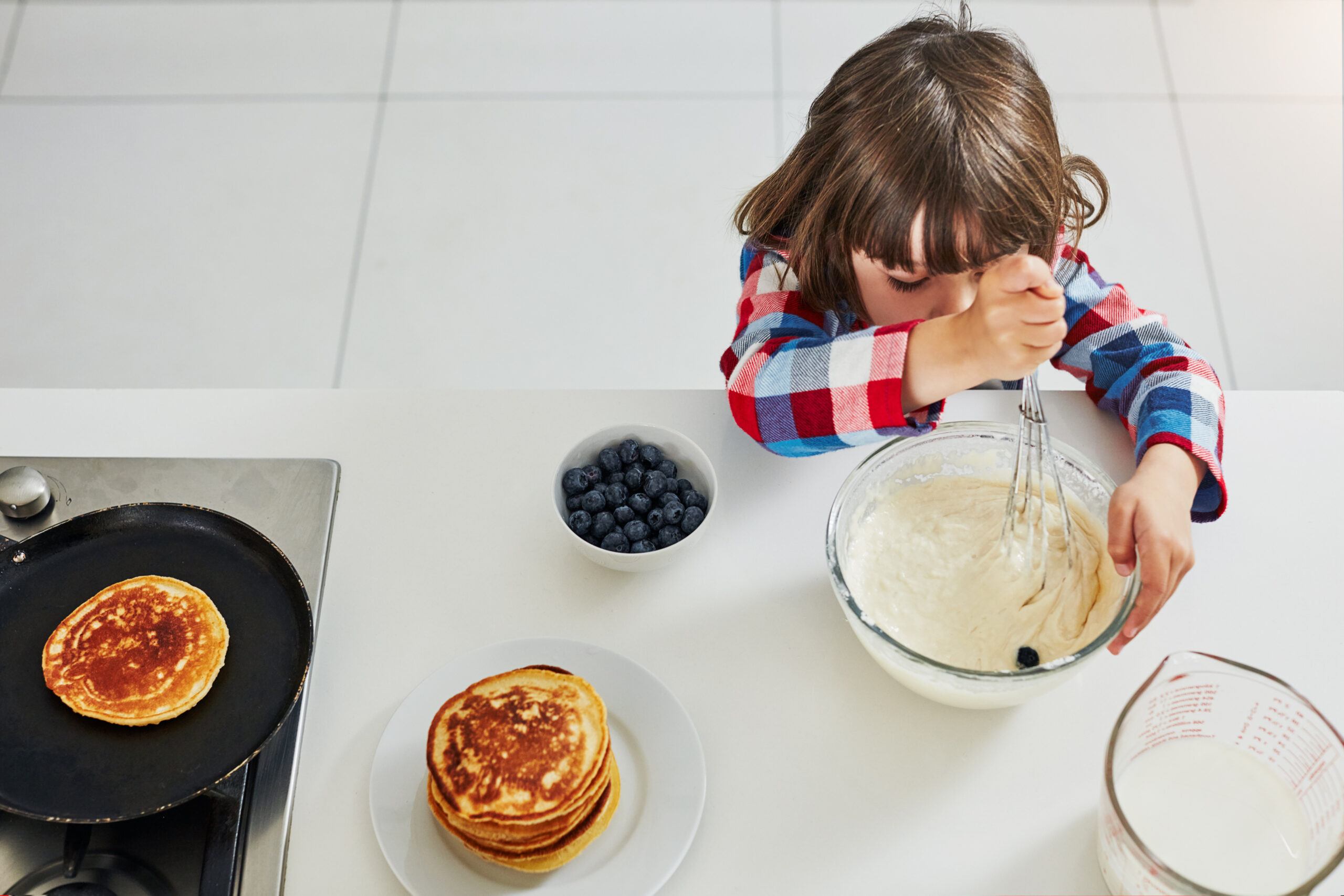
We all know that breakfast is an important start to the day, but with busy mornings and fussy children, it can be hard to make sure our kids are having a balanced breakfast. It is just as important to give a balance of all macronutrients at breakfast as it is for lunch and dinner. Having a meal that has protein, complex carbohydrates and healthy fats will help to stabilise blood sugar levels and provide sustained energy. This helps our kids to have better moods and better concentration throughout the days, while supporting their growing bodies.
Here are some of my top tips to help you give your child a balanced breakfast.
1. Give protein at every meal
While it might be tempting to hand over a bowl of cereal or a piece of vegemite toast, these breakfast foods won’t keep your child full until morning tea. A boiled egg given alongside the toast or a smoothie with a spoonful of nut butter or tahini and some yoghurt added in are easy ways of boosting the protein content of these go-to breakfasts. Baked beans, savoury mince and scrambled eggs are all great, high-protein breakfast options.
2. Choose wholefood ingredients over highly refined carbohydrates and high sugar foods
3. Prep ahead
4. Sneak in extra veggies
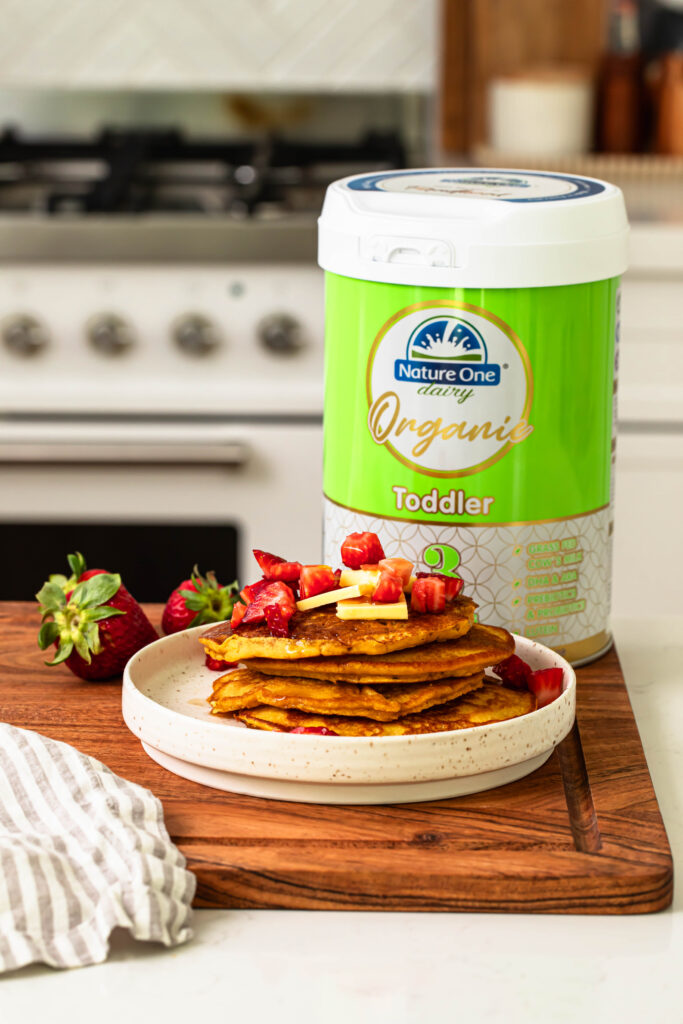
Almond Flour Pumpkin Pancakes
Prep time: 10 minutes
Cook time: 15 minutes
Ingredients
- 1 cup almond flour, or blanched almond meal
- ½ cup buckwheat flour
- ½ cup tapioca flour
- 2 teaspoons baking powder
- 2 large eggs
- ½ cup pumpkin puree
- 1 tablespoon pure maple syrup
- 1 tablespoon vanilla extract
- 1 cup almond milk
- Extra virgin olive oil, for frying
- 1 scoop Nature One Dairy Organic Milk Powder (optional)
To serve
- strawberries, fresh, sliced, or other seasonal fruit
- yoghurt of choice
- pure maple syrup
Instructions
- Add the almond flour to a large mixing bowl. Sieve the buckwheat flour, tapioca flour and baking powder to the bowl. Add Nature One Dairy Organic Milk Powder, if using. Whisk to combine and create a well in the centre of the flour.
- Crack the eggs into the centre of the flour and add the pumpkin puree, maple syrup and vanilla extract. Begin whisking while slowly pouring in the milk. Whisk into a smooth batter.
- Bring a large frying pan to a medium heat. Add a drizzle of olive oil and then around ¼ cup of batter per pancake. Fry 2-3 pancakes at a time. Once bubbles start to form on the surface, use an egg flip to flip each pancake.
- Once golden brown on both sides, transfer pancakes to a plate and cover with a clean tea towel. Repeat this process until all batter has been used.
- Serve pancakes warm topped with berries and maple syrup. For small children, serve the pancakes cut up into bite sized pieces alongside some cut up fruit, vanilla yoghurt and a little maple syrup (optional).
About the author